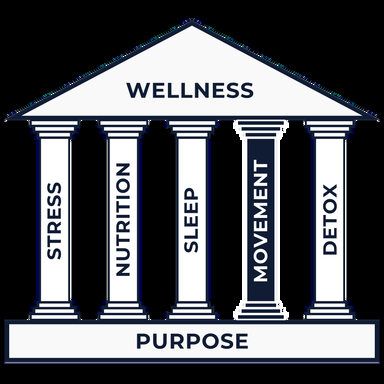
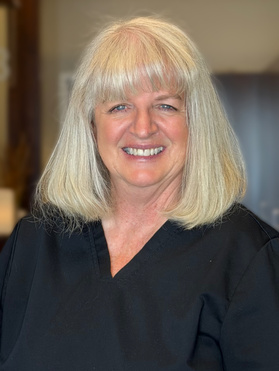
A Word from Joleen Zivnuska
|
|
Building Strong Bones: It's Never
Too Late
If you have ever been in my exam room, you
know I grew up on a cattle ranch in the
Flint Hills, where my days were filled
with carrying five-gallon buckets of
grain, hefting hay bales, lugging heavy
saddles, and teaching colts and 4-H club
calves to lead. Back then, I had no
awareness of how all those childhood
activities were building the foundation
for the bone health I'm still
benefiting from today in menopause.
The Foundation Starts in
Childhood
Belinda Beck, PhD, an exercise
physiologist and bone researcher, states
"Osteoporosis is a childhood
disease" (1). The seeds of bone
health are planted in our youth through
proper nutrition, including adequate
calcium and vitamin D, but nutrition alone
isn't enough. Dr. Beck emphasizes
diverse sports and movements that create
mechanical stress on bones: activities
involving impact, jumping, and resistance
rather than just swimming, walking, or
cycling. She advocates for variety over
specialization, as repetitive movements
don't provide the diverse loading
that builds comprehensive bone strength
(1). Our maximum bone potential is largely
determined by the time growth plates fuse,
around age 18 for females and 25 for
males, making these early years critical.
Maintaining Bone Strength Throughout
Life
Building strong bones in childhood is
important, but maintaining them throughout
life is just as critical. Bones are
constantly remodeling through the work of
osteoblasts, which build bone, and
osteoclasts, which break it down. Estrogen
plays a key role in this process by
slowing osteoclast activity and keeping
the breakdown of bone in check. Adults in
their 30s and 40s can benefit from many of
the same strategies as children,
particularly regular mechanical loading
through physical activity (1). Bones get
stronger when they are challenged and
weaken without demand, making continued
movement an essential part of lifelong
bone health.
Gender-Specific Considerations
Men typically maintain protective
testosterone levels throughout life,
though they too lose bone strength when
muscle mass declines. For women, the
relationship between hormones and bone
health is particularly profound. Both
estrogen and progesterone stimulate bone
formation and prevent excessive breakdown.
In fact, hormone replacement therapy (HRT)
has proven to be the most effective
intervention for preventing osteoporosis
and fractures in postmenopausal women (4),
with studies demonstrating a 35 to 50
percent reduction in fracture risk among
women taking estrogen (3). Testosterone
also plays an important role in
women's bone health by stimulating
bone-building cells and helping maintain
lean muscle mass (1).
However, the benefits of HRT are only
maintained with continued use. When
hormone therapy is discontinued,
osteoclast activity accelerates and
fracture risk rapidly returns to baseline
within six years (4). This is particularly
significant given that 25 to 30 percent of
women who suffer a hip fracture die within
one year, and survivors rarely regain
previous mobility, often requiring
assisted living (2). For these reasons,
beginning hormone replacement during
perimenopause and continuing lifelong is
strongly encouraged.
Risk Factors for Osteoporosis
• Family history of osteoporosis or hip
fracture
• Early menopause or low
estrogen/testosterone
• Low body
weight or eating disorders
•
Long-term corticosteroid use (prednisone,
etc.)
• Smoking or heavy alcohol
consumption
• Insufficient
weight-bearing exercise
It's Never Too Late to
Improve
Dr. Beck's LIFTMOR study provides
compelling evidence that it is never too
late to support your bone health.
Postmenopausal women with significant bone
loss (scores of -1 or worse) showed
remarkable improvements after just eight
months of twice-weekly 30-minute sessions
of supervised heavy lifting and jumping,
significantly better than low-intensity
exercise (5). This proves that we can
meaningfully improve skeletal health even
with existing bone loss after menopause.
Progression of bone loss can be slowed and
existing damage reversed through:
•
Hormone Replacement Therapy
(HRT):
The gold standard for postmenopausal
women
•
Exercise: Resistance
training (weights, bands, body weight),
weight-bearing activities (walking,
dancing, climbing, hiking), and
high-impact work (jumping, plyometrics)
•
Nutrition: Adequate
calcium, vitamin D, K2, and protein
Strong bones do not happen by accident.
With the right nutrition, movement, and
hormonal support, protecting your bone
health is absolutely achievable — and the
Prairie Health & Wellness team is here
to support you every step of the way. We
offer a variety of options to help you
build sustainable habits for meaningful
change. Transform Training is a great
option for those interested in resistance
training. Please see the link below to
learn more. As always, talk to your
provider about whether supplementation,
hormone therapy, or a weight training
program is right for you.
Continued on our website. Click here to
read more!
|
Check out our
Bone
Health Cookbook!
|

|
|
|
|
"Our bodies were designed
to move. Every step, stretch,
and rep is an investment in
long-term health."
|
|
STAFF SPOTLIGHT
Haley Mayfield, PA
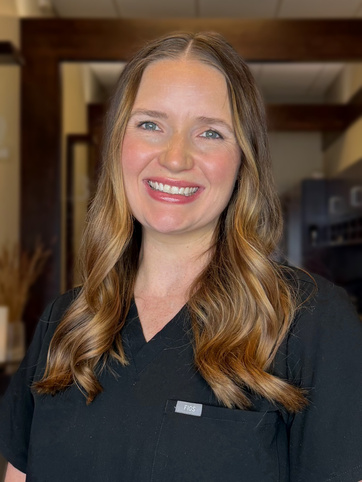
We are thrilled to welcome Haley
Mayfield, PA to the PHW family!
With a background in emergency
medicine, health science, and
exercise science, Haley brings a
thoughtful, whole-person approach
to care. She is passionate about
building meaningful relationships
and empowering patients to take an
active role in their long-term
health and wellness. Haley begins
seeing patients on March 2nd.
Learn more about Haley at the
link below!
|
|
SUPPLEMENT HIGHLIGHT
Strontium MD
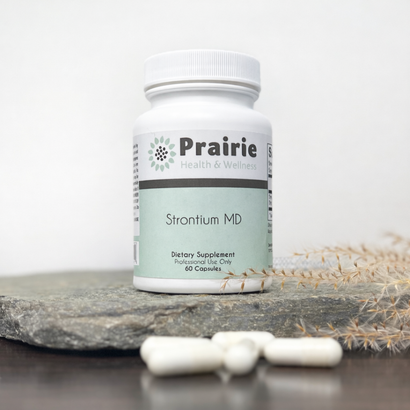
Our Strontium MD supplement
provides a therapeutic dose of
strontium, a trace mineral
chemically similar to calcium that
works on both sides of this
equation. Research shows that
strontium naturally supports bone
health by encouraging osteoblasts
to build more bone while also
slowing down the osteoclasts that
break bone down. This dual action
helps maintain healthy bone
density over time.
|
|
Transform Training
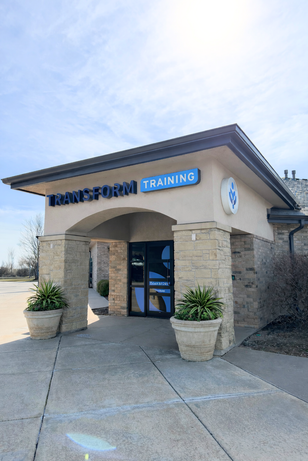
Did you know, Transform Training
offers a Virtual Membership that
connects you with our
physician-led coaching team and
gives you access to fully
customized workout programs,
nutrition guidance, macro
calculations, and weekly virtual
check-ins — all built around your
unique needs and your plan of care
at PHW. Ask your provider at your
next visit if Transform Training
is right for you. They can connect
you with a Transform Coach to get
started.
|
|